Friday

eBook: Critical Connection: A Practical Guide to Parenting Young Teens by Andy Kerckhoff


Critical Connection is full of thought-provoking stories and practical advice that will help parents raise healthy young teens, inside and out. It teaches parents how to build healthy, loving families that their 10-14-year-olds can rely on for safety, support, and unconditional love. Kids at this stage of development may not admit it, but they need a stronger connection with their parents than ever before. At this stage in life, parents must seek after a better understanding of the age and try new ways to connect with and guide their children.
It discusses how to:
Connect with your middle school child
Build a healthy family life
Discipline with love
Create resiliency and independence in your child
Foster a healthy social life in middle school
Guide their academic, athletic, and artistic life
Handle the new media and electronic devices
Develop work ethic and financial sense
Critical Connection is an Amazon Bestseller and has earned 4.9 stars on 44 reviews.


Offer Price 50 KES ONLY!!

Call/Text/Whatsapp 0717032323 or send an email to tujuekenya@gmail.com to get the ebook.

NB:
eBook is available in PDF format.

Which eBook are you looking for? Ask us on 0717032323

For More Notes, Revision Papers, Ebooks, Exams and other Learning Materials,
Contact EbooksKenya.com | tujuekenya@gmail.com | +254717032323 |

Evans Aol
EbooksKenya.com
Cell  +254717032323

eBook: As a Man Thinketh by James Allen

As a Man Thinketh by Allen James
The mind guides our footsteps as we progress along the pathway of life.
Purity of mind leads inevitably to purity of life, to the precious love and understanding that should control our everyday acts and attitudes towards friends and foes.
But where must one look for guidance? How does one achieve purity of mind that alone brings happiness and confidence?
The author offers his clear answers in this book As A Man Thinketh. His words have helped millions for more than a century--and they continue to point the true way to a better life for a troubled humanity.
"Out of a clean heart comes a clean life and a clean body," James Allen writes. "out of a defiled mind proceeds a defiled life and a corrupt body."
Too many mortals strive to improve only their wordly position--and too few seek spiritual betterment. Such is the problem James Allen faced in his own time. The ideas he found in his inner-most heart after great searching guided him as they will guide you.


Offer Price 50 KES ONLY!!

Call/Text/Whatsapp 0717032323 or send an email to tujuekenya@gmail.com to get the ebook.

NB:

eBook is available in PDF format.

Which eBook are you looking for? Ask us on 0717032323


For More Notes, Revision Papers, Ebooks, Exams and other Learning Materials,
Contact EbooksKenya.com | tujuekenya@gmail.com | +254717032323 |

Evans Aol
EbooksKenya.com
Cell  +254717032323

How to Publish a Book

 
WELCOME TO DILEV LIMITED SELF-PUBLISHERS


Our Book Publishing Process and Services
Manuscript Evaluation
Before a manuscript is published, you will need an evaluator to check whether it is fit for the audience you target to reach out to.
Our professional evaluators (composed of competent writers and editors) are experienced in manuscript evaluation and critiquing before it is published. They will read and critique your manuscript, assess it for suitability, and analyse the major elements like plot, dialogue, characterization, or structure, coherency, consistency, and organization (in the case of fiction or non-fiction works).
For educational works such as books, our evaluators will check and align your work to the syllabus, content coverage, level of content covered and suitability of the manuscript to the level targeted among other pointers.
We will simply help you publish a manuscript that will undoubtedly pass and be approved by the KICD or any other relevant body responsible for approving educational publications.
Editing
DILEV is composed of a team of excellent editors who have worked in different publishing companies. Our editors understand the need for quality in every manuscript they handle. We simply make our clients succeed by polishing their works to the best quality needed by the readers.
We ensure that we follow the right procedure in dealing with any manuscript.
Depending on the timeline given, we follow the following procedure to give out an alluring result out of a manuscript:


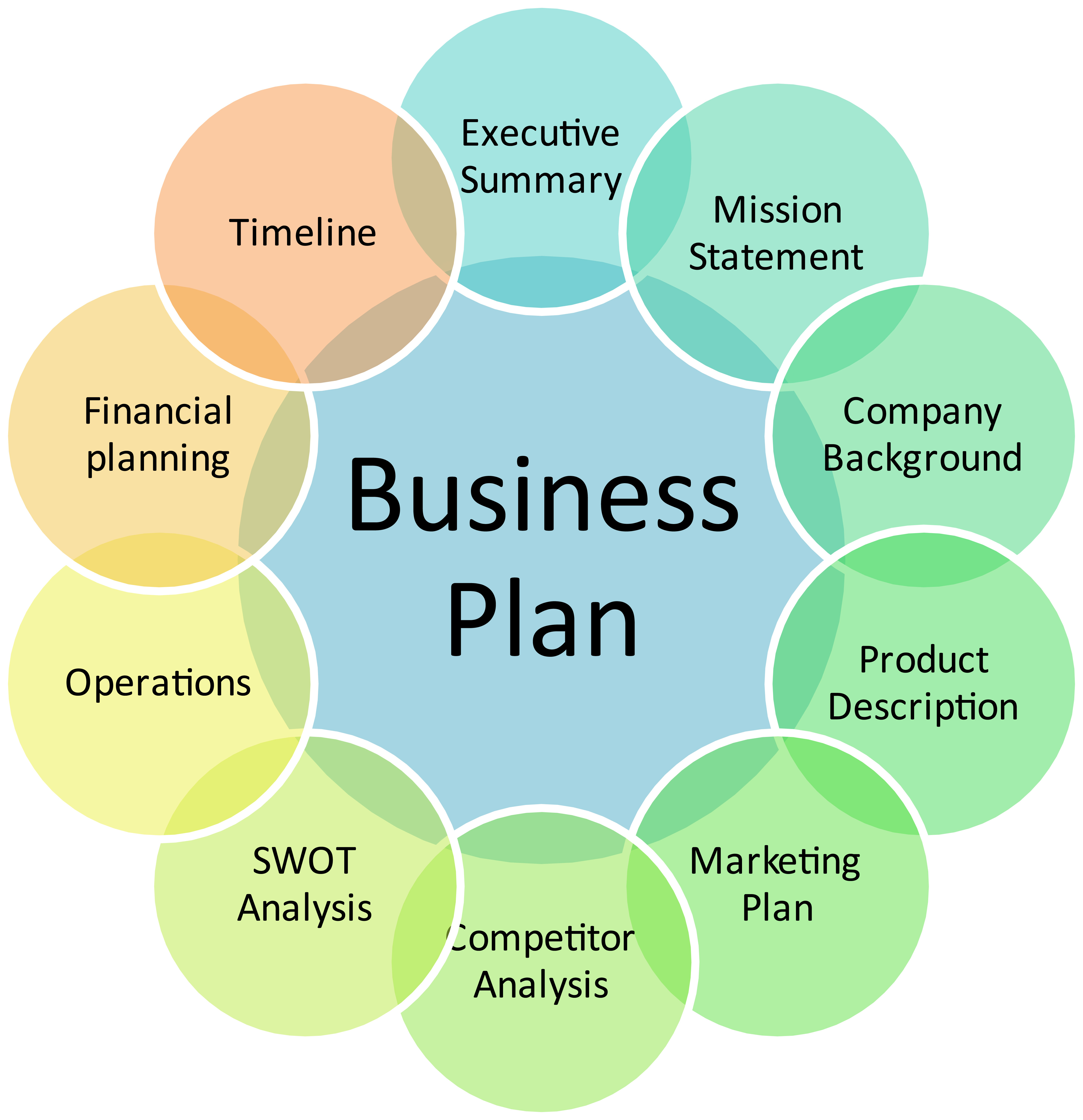
Business Plan Writing Guide

Business Plan Writing Guide

How to write a good workable business plan is something every entrepreneur needs to know. In the current world, businesses need to be made formal to attract investors and obtain business loans from banks. Here is a guide to what a business plan is and how to write it.

Importance of a good business plan

  1. A business plan will keep you focused on your project
  2. It is an important instrument in planning future activities
  3. It helps project cash flows into and through the business
  4. It is critical in securing finances from lenders and investors
  5. --Helps you think critically if you're ready for the business

Saturday

Advantage and Disadvantages of Plasma Display Screens

The following are the advantages and disadvantages of Plasma Display Screens:
 ADVANTAGES
  1. Slim profile
  2. Can be wall mounted
  3. Less bulky than rear-projection televisions
  4. Produces deep blacks allowing for superior contrast ratio
  5. Wider viewing angles than those of LCD; images do not suffer from degradation at high angles unlike LCD's.

Plasma Display Screens

Wht are Plasma Display Screens?
A plasma display is a computer video display in which each pixel on the screen is illuminated by a tiny bit of plasma or charged gas, somewhat like a tiny neon light. Plasma displays are thinner than cathode ray tube (CRT) displays and brighter than liquid crystal displays ( LCD ). Plasma displays are sometimes marketed as "thin-panel" displays and can be used to display either analog video signals or display modes digital computer input.

Advantages and Disadvantages of LCD's

ADVANTAGES OF LCD's
The LDC monitors or screens have the following advantages and disadvantages:
An LCD screen TV
1. LCD monitors display static images from computer sources extremely well with full color detail and no screen burn-in.
2. The number of pixels per square inch on an LCD display is typically higher than other display technologies.
3. LCD monitors are good at displaying large amount of data e.g. on an Excel spreadsheet with exceptional clarity and precision.

Liquid Crystal Dispaly (LCD)

What are LCD's?
An LCD Screen Television
A liquid crystal display (LCD) is a thin flat electronic visual display that uses the light modulating properties of liquid crystals (L Cs). LCs does not emit light directly. They are used in a wide range of application including computer

Tuesday

Strategies to tackle Education Challenges in Uganda


Strategies to tackle Education Challenges in Uganda
The government of Uganda should consider these strategies in solving education problems in the country. They include;
End armed conflict and ensure security and peaceful environment.
·         Develop and promote education programmes that target war-affected areas and other disadvantaged groups.
·         Strengthen laws on education and promote good governance.

Educational Challenges in Uganda.

The following are some of the challenges faced in the Ugandan education system;
·         High enrolments against limited facilities.
·         Low transition rates across the system
·         Inadequate and poorly trained teachers.
·         Gender imbalances.
·         Providing education to children from disadvantaged communities.

Trends in higher education in Uganda

Higher education in Uganda is offered at the universities and other tertiary institutions, which admit those with six years of secondary education. The universities offer degree and diploma courses, while the tertiary institutions offer certificate and diploma courses.
Higher education has grown significantly since the early 1990s, with enrolments increasing by about 90 percent to date. At least there are five public universities and 17 private universities in the country.

Adult Literacy and Continuing Education in Uganda

The revival of adult literacy programmes started in 1992 with a pilot project in eight districts of Apac, Hoima, Kabarole, Mbarara, Mpigi, Mukono, Iganga and Kamuli.  The project was then extended to cover 22 districts in 1999 and thereafter expanded to the whole country.  Evaluations carried out on the programmes show that it has improved enrolments considerably.
 According to Uganda's National Adult Literacy Strategic Investment Plan, the country's literacy rate is 68 per cent - 76 per cent for men and 61 per cent for females. 

Non-Formal Education Uganda.


Non-formal education is provided to youth who missed the chance to go to regular primary schools for various reasons such as economic and environmental difficulties, as well as political conflict mainly in the northern part of the country.
The programme targets youth in pastoral and fishing communities, those engaged in child labour and those living in conflict and hardship areas.
There are a number of initiatives by the government, civil society, religious groups and development agencies.

Special needs Education in Uganda


Special needs education has benefited from the UPE funds.  Besides, children with special learning needs are integrated into normal schools through the policy of inclusive education.  Through the various interventions, the number of children with special learning needs have increased quite significantly, from 26,429 before UPE to 218,380 in 2004.  However, this declined to 182,350 in 2005 with 98,469 boys and 83,881 girls.

Secondary Education in Uganda


Secondary education has registered high enrolment growth rates since the mid-1990s, following the introduction of UPE, which saw large numbers of children join primary schools. The number of government-aided secondary schools grew by 20 per cent while the private ones increased by 15 per cent in the past 10 years.
According to the 2005 Annual School Census, there were 697,507 students enrolled in secondary schools in 2004.  The figure was estimated to have risen to more than 700,000 in 2006. A key development in secondary education is the increased participation of girls.  According to available statistics, girls constituted 45.5 per cent of students enrolled in secondary schools, while boys were 55.0 per cent.  Some of the reasons for this was affirmative action, including providing proper sanitation for girls and creating conducive environment for them in schools. However, secondary education is still marked by low transition rates.  In 2004, for example, only 50 per cent of the 400,000 pupils who completed primary school transited to post-secondary institutions.

Another major development in Uganda's secondary education is the plan by the government to abolish fees and make it free for all qualified students.  The universal secondary education (USE) is expected to start in January 2007 and will first benefit those enrolling in Form One and then move gradually until Form Four.  Universal secondary education will put Uganda among the few countries in Africa to offer a complete free basic education covering 12 years. 

Primary Education in Uganda


Uganda was the first country in East Africa to introduce UPE in 1997, offering free schooling for four children in every family.   This increased school enrolment dramatically from less than 3 million in 1997 to 6.8 million in 2003, rising to about 7.4 million in 2004.  The figure has then stabilized at about 7.2 million in 2005, as the problem of over age learners has been contained.
The gross enrolment rates have gone down from 132 per cent in 2000 to 118 per cent in 2005, with 119 per cent and 117 per cent for boys and girls.  Similarly, the net enrolment has improved from 86.5 per cent in 2000 - 99.8 per cent for boys and 82.3 per cent girls to 93.01 per cent in 2005, comprising 95.6 per cent for boys and 92.4 per cent for girls.
The gross enrolment rates have improved from 128 per cent in 2000 to 118 per cent in 2005, with girls recording the best improvement.  The net enrolment rate has also been steadily raising, from 85.5 per cent in 2000 to 95 per cent in 2005.  The implication of this is that there are more children aged between, 6-12 enrolled in primary schools.
Although the number of qualified teachers rose to 99.6 per cent in 2002, the figure went down to 93 per cent in 2003 and 92 per cent in 2004. Similarly, the pupil-teacher ratio has come down, now standing at 51:1.

Early childhood education in Uganda

The ministry of Education and Sports through the department of pre-primary and primary education is responsible for making policies; development of curriculum guidelines, training of teachers and caregivers; coordination and monitoring of ECE interventions.  ECE targets children between four and five years.
The ministry has developed a draft ECE policy while the National Curriculum Development Centre (NCDC) has developed a draft ECE learning framework, as well as produced and distributed non-book materials to Primary 1 and Primary 2 classes in government-aided schools.  According to the ECE policy, the government is responsible for the provision of curriculum; teacher training supervision; and developing policy
framework and guidelines for coordinating the programmes.  Parents and communities are responsible for providing teaching and learning facilities and paying teachers' salaries. According to government statistics, there were 41,775 children enrolled in ECE in 2004, comprising 21,179 girls and 20,596 boys.  The highest enrollments were recorded in 2002, when there were 78,257 pupils - 38,581 boys and 39,676 girls.  However, it is noted that the apparent decline in enrollment may not represent the real situation on the ground because many centers do not submit their statistics to the central government.
Other achievements made are the establishment of teacher training programmes for ECE teachers at the Institute of Education Kyambogo currently known as Kyambogo University. The training is offered at degree and diploma levels. 

Some of the challenges facing ECE include inadequate trained teachers, shortage of learning and teaching materials, poor curriculum, low enrollment ratios and lack of effective inspection. 

Education System of Uganda

Vision
Quality Education and Sports for All.
Mission
To provide for support, guide, coordinate, regulate and promote quality education and sports to all persons in Uganda for national integration, individual and national development.
Objectives
  • To make significant and permanent gains in achieving equitable access to education at all levels;
  • To improve considerably the quality of education particularly at the primary level;
  • To enhance the management of education service delivery at all levels particularly the district level; and
  • To develop the capacity of the ministry to plan, programme and manage an investment portfolio that will effectively and efficiently develop the education sector.
Overview of education system
The current education system in Uganda has been in force since independence.  It consists of one year pre-primary education, seven years of primary education, two year of higher secondary and then three to five years of university education.

After successful completion of the primary school cycle, one can either join lower secondary school or take a three year craft course in vocational and technical training.  On average, only about 40 per cent of those leaving primary school are absorbed into the secondary cycle.  On completion of secondary education, one can proceed to high school (Advanced Level); technical training institutes for advanced craft course that takes two or three years; primary teachers college for a two-year; or join the various government training colleges.  Those completing "A" level either proceed to the university, national and technical training colleges or other higher education training institutions. 

Education in Uganda

Background information
Uganda is a landlocked country located in the eastern part of Africa.  It has a total surface of 241,039 square kilometers.  It is bordered to the north by Sudan, to the east by Kenya, to the south by Tanzania, to southwest by Rwanda and to the west by the Democratic Republic of Congo.
Uganda became in depended in 1962.  However, it went through a turbulent political history for about two decades marked by coups and military dictatorship that slowed its socio-economic growth.  It is not until 1986, when the National Resistance Movement (NRM) took over power, that the country started enjoying peace.  Since, it has recorded significant growth in various sectors of the economy.  It recorded an economic growth 5.3 per cent in 2005/6 and this is expected to rise to 5.6 per cent in 2006/7.  Similarly, it recorded an inflation rate of 5.3 per cent.
Agriculture is the mainstay of the economy, accounting for more than 50 per cent of the GDP.  According to the 2002 Housing and Population Census, Uganda has a population of 24.4 million people.  However, recent estimates put the population at 28 million as of 2006, with 50 per cent being children under 14 years.  Literacy rate is 68 per cent, with 76 per cent for males and 61 per cent for females.  English is the official language, however, Ganda or Luganda and Kiswahili are also widely spoken.

Although the country has operated a no-party system in the past 20 years, a national referendum held in July 2005 paved the way for the introduction of multiparty politics in the country. 

Education Challenges in Tanzania

The following re some of the major huddles faced in the Tanzanian system of education.

  • Low transition rate from primary to secondary school. Less than one third of all candidates who sit Standard Seven (class7) examinations proceed to secondary schools yearly.
  • Regional and gender disparities in access to primary education, with some regions registering 126 per cent enrollment while others 70 per cent.
  • Inadequate teachers for the UPE programme. The national average teacher/pupil ratio ( TPR) is 1:58 although some regions like Kigoma have a ratio of 1:74.
  • Poor remuneration and lack of teachers.
  • Inadequate coordination within the departments responsible for provision of education
  • Poor learning environments
  • Shortage of teaching and learning materials.
  • Lack of adequate funds to meet the high learning costs across all the levels.